
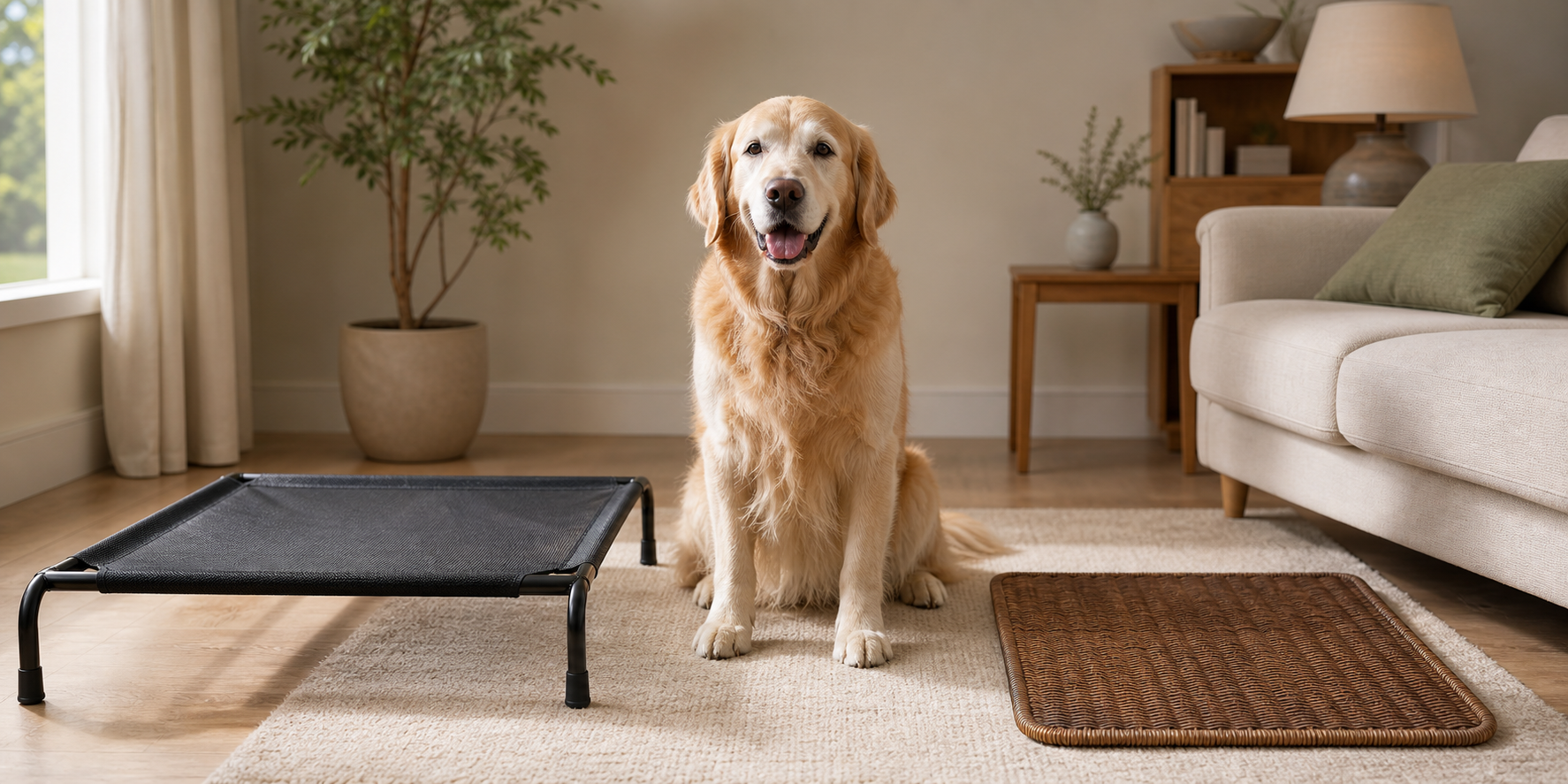
Long summer days can mean more time together, but heat and humidity require extra planning when you care for an older dog. Senior dogs may tire more quickly, move at a slower pace, or live with health conditions that affect how well they tolerate warm weather.
Summer comfort is not about finding one product that “solves” heat. It starts with reducing heat exposure, providing fresh water and ventilation, adjusting daily routines, and watching your dog closely. A breathable resting surface can make the home more comfortable, but it should always be part of a broader heat-safety plan.
## Why Senior Dogs Need Extra Attention in Hot Weather
Dogs primarily release body heat by panting. They have only limited sweat glands in their paw pads, so they cannot cool themselves in the same way people do.
According to [Cornell University College of Veterinary Medicine](https://www.vet.cornell.edu/departments-centers-and-institutes/riney-canine-health-center/canine-health-topics/summer-heat-safety-tips-dogs), all dogs can experience heatstroke, but elderly dogs, overweight dogs, short-nosed breeds, and dogs with heart or breathing conditions may face greater risk.
Age alone does not tell you exactly how much heat a dog can tolerate. Coat type, body condition, humidity, activity level, medications, and existing health concerns can all make a difference. If your senior dog has a diagnosed condition or has struggled in warm weather before, ask your veterinarian for an individualized summer plan.
## Start With a Cooler Daily Routine
The safest approach is to limit your dog’s exposure before overheating begins.
Schedule walks and outdoor bathroom breaks for the cooler parts of the day, usually early morning or later in the evening. Keep outings shorter when conditions are hot or humid, and allow your dog to set the pace. A walk that felt easy in spring may be too demanding during summer.
The [ASPCA’s hot-weather guidance](https://www.aspca.org/pet-care/general-pet-care/hot-weather-safety-tips) recommends providing plenty of fresh, clean water, access to shade, avoiding overexertion, and keeping pets indoors during extreme heat.
At home, create a quiet rest zone with:
- Fresh water within easy reach
- Air conditioning or safe ventilation when available
- Closed curtains or blinds during the hottest hours
- A surface away from direct sunlight
- A clear, nonslip path to water and bathroom areas
- More than one resting option so your dog can choose
Never leave a dog in a parked vehicle, even for a short stop or with the windows partly open. The [American Veterinary Medical Association](https://ebusiness.avma.org/files/productdownloads/AVMA_PetInCar_Heat_Flyer_090718.pdf) warns that the temperature inside a vehicle can rise rapidly within minutes.
Hot pavement is another concern. Avoid letting your dog linger on asphalt or other sun-heated surfaces. Choose grass and shaded routes where possible, and check the ground before beginning a walk.
## Make Water Easy to Reach
Senior dogs should not have to cross a slippery floor, climb stairs, or compete with another pet to reach water. Place bowls near the areas where your dog spends the most time, and refresh them regularly.
Bring water on every outing, even if the walk is short. Offer regular opportunities to drink, but never force water into the mouth of a dog who appears confused, weak, or unable to swallow normally.
A cooling mat, elevated bed, fan, or shaded space cannot replace hydration. If your dog suddenly drinks much more or less than usual, discuss the change with your veterinarian rather than assuming it is only because of the weather.
## Choose a Breathable Summer Resting Surface
Thick plush bedding can feel warm during hot weather. Some dogs naturally move to tile or another firm surface because it feels less heat-trapping. Providing multiple safe options lets your dog choose what feels most comfortable.
A [breathable woven cooling mat for dogs and cats](https://tendrapaw.com/products/breathable-woven-pet-cooling-mat) offers a lightweight alternative to thick bedding. Its woven surface allows airflow and can provide a cooler-feeling place to rest without gel, water, electricity, or refrigeration.
It is important to understand what this type of mat does not do. It does not actively lower body temperature, cool a hot room, prevent heatstroke, or treat an overheated dog. Place it inside an already comfortable, ventilated environment and inspect it regularly for fraying or chewing damage.
An [elevated breathable mesh dog bed](https://tendrapaw.com/products/elevated-breathable-mesh-dog-bed) creates airflow underneath the sleeping surface and keeps a dog away from a warm or damp floor. It may suit a dog who can step onto a low raised surface safely.
For senior dogs, stability matters as much as airflow. Position an elevated bed on a flat surface, confirm that the frame does not wobble, and place it away from stairs and busy walkways. A nearby nonslip mat may help with footing. Dogs with limited mobility, poor balance, or difficulty lifting their legs may be more comfortable on a floor-level woven mat instead.
Neither option is a medical device. If your dog has arthritis, weakness, pain, or recent surgery, ask your veterinarian what bed height and surface firmness are appropriate.
## Know the Early Signs of Overheating
Do not wait for a dog to collapse before taking heat seriously. Cornell lists heavy panting, seeking shade, drooling, whining, and reluctance to play among possible early signs of overheating.
Move your dog into a cooler, well-ventilated or air-conditioned area and stop all activity if you notice unusual heat-related discomfort.
More serious warning signs can include:
- Excessive or persistent panting
- Difficulty breathing
- Heavy drooling
- Vomiting or diarrhea
- Weakness or stumbling
- Confusion or unusual unresponsiveness
- Seizures
- Collapse
These signs may indicate a life-threatening emergency. Contact a veterinarian or emergency veterinary hospital immediately and begin transport as directed by the clinic.
While arranging veterinary care, authoritative guidance generally recommends moving the dog out of the heat, applying cool or tepid—not ice-cold—water, and using a fan to support evaporation. Do not use ice or extremely cold water, and do not delay veterinary treatment because the dog appears to improve. Heat-related illness can cause internal complications that are not immediately visible.
## A Simple Senior-Dog Summer Checklist
Before a warm day begins, ask:
- Is fresh water available in every main resting area?
- Can my dog reach it without crossing a slippery obstacle?
- Are walks scheduled outside the hottest hours?
- Is the indoor rest area shaded and ventilated?
- Does my dog have a stable, breathable place to lie down?
- Do all family members recognize the warning signs of overheating?
- Is our veterinarian’s phone number easy to find?
Products can improve everyday comfort, but attentive care is the most important part of summer safety. Watch your senior dog’s breathing, energy, movement, and behavior, and respond early when something seems different.
With thoughtful routines, comfortable resting choices, and veterinary guidance when needed, your older companion can enjoy quieter, safer summer days by your side.
*This article provides general educational information and is not a substitute for veterinary diagnosis or treatment. Contact a veterinarian immediately if you suspect heatstroke or another emergency.*
---
# Internal Links Used
- `breathable woven cooling mat for dogs and cats` → `https://tendrapaw.com/products/breathable-woven-pet-cooling-mat`
- `elevated breathable mesh dog bed` → `https://tendrapaw.com/products/elevated-breathable-mesh-dog-bed`
- Optional additional link: `home safety and anti-slip solutions` → `https://tendrapaw.com/collections/anti-slip-home`
# Reference Sources
- [Cornell University College of Veterinary Medicine — Summer Heat Safety Tips for Dogs](https://www.vet.cornell.edu/departments-centers-and-institutes/riney-canine-health-center/canine-health-topics/summer-heat-safety-tips-dogs)
- [ASPCA — Hot Weather Safety Tips](https://www.aspca.org/pet-care/general-pet-care/hot-weather-safety-tips)
- [AVMA — Pets in Hot Cars Safety Resource](https://ebusiness.avma.org/files/productdownloads/AVMA_PetInCar_Heat_Flyer_090718.pdf)
- [VCA Animal Hospitals — Heat Stroke in Dogs](https://vcahospitals.com/know-your-pet/heat-stroke-in-dogs)