
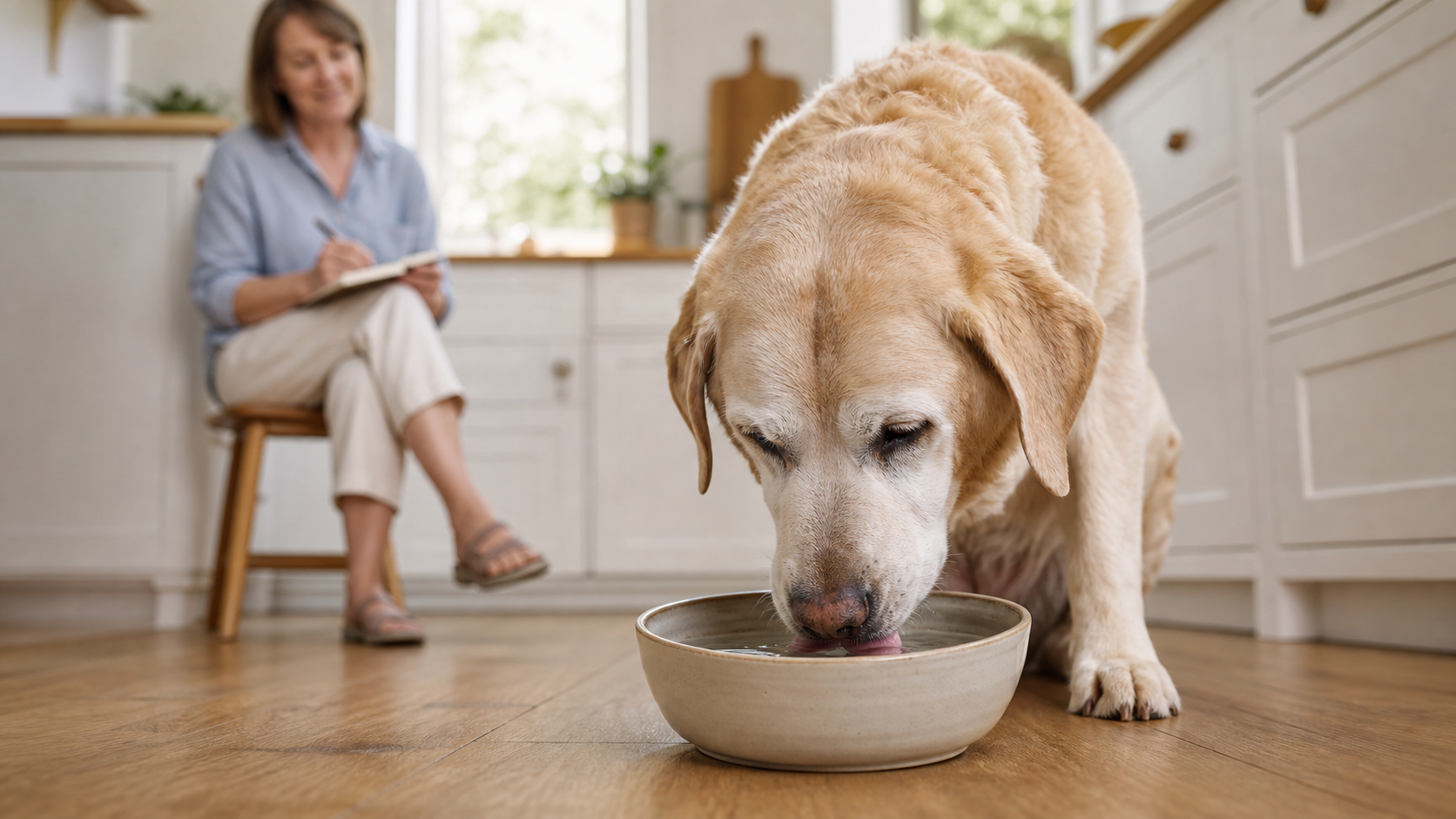
## Your Senior Dog Is Drinking More Water? Stop Calling It "Just the Heat"
The water bowl is empty again.
Maybe it is summer. Maybe the walk was longer. Maybe the room felt warm.
Those explanations can be true. But when a senior dog repeatedly drinks more than usual, asks to go outside more often, starts waking at night, or has accidents after years of reliable house-training, the change is worth documenting instead of dismissing.
More water is not a diagnosis. It is a clue.
The [American Animal Hospital Association](https://www.aaha.org/resources/10-pet-health-signs-you-should-never-ignore/) notes that increased thirst or frequent urination can be associated with several health concerns, including diabetes, kidney disease, and urinary tract problems. Senior-dog guidance from AAHA also lists altered thirst patterns and changes in urination among signs that merit veterinary attention.
The goal is not to guess what is wrong at home. The goal is to notice a repeatable change early enough to describe it clearly.
## The Difference Between One Thirsty Day and a Pattern
Dogs can drink more after exercise, during hot weather, after eating dry food, or when routines change. A single full bowl does not automatically signal a problem.
Look for a pattern across several days:
- Is the bowl being refilled more often than usual?
- Is your dog waking overnight to drink or urinate?
- Are outdoor breaks suddenly more urgent or more frequent?
- Is urine volume noticeably larger?
- Has house-soiling appeared after years of reliable habits?
- Is there a change in appetite, energy, weight, vomiting, or breath?
The details around the water bowl matter. A dog who drinks more after a hot hike is different from a dog who drinks more every day, loses weight, and needs to urinate overnight.
## Do Not Restrict Water to "Test" Your Dog
If you are worried that your dog is drinking too much, it may be tempting to remove the bowl or offer less water.
Do not do that unless a veterinarian gives you specific instructions.
Water restriction can be unsafe for a dog that is genuinely thirsty. It also makes the observation less useful. Keep normal access to fresh water, then record what changes in daily life.
## A Better Three-Day Record
You do not need to measure every drop perfectly. Start with a simple log for three days.
Write down:
1. When you refill the bowl and roughly how much it held.
2. Extra requests to go outside.
3. Overnight waking, accidents, straining, or unusual urine color.
4. Food intake and treats.
5. Vomiting, diarrhea, lethargy, weight change, or behavior change.
6. Any recent changes in medication, supplements, food, climate, or activity.
Take a photo of the water bowl size if you are unsure what to tell the clinic. A quick written timeline is more useful than the sentence, "I think she has been drinking more lately."
## Why Senior Dogs Deserve a Faster Call
Senior dogs can have several health conditions at the same time, and their early signs may overlap. AAHA's [Senior Care Guidelines](https://www.aaha.org/resources/2023-aaha-senior-care-guidelines-for-dogs-and-cats/evaluating-the-unhealthy-senior-pet/) list altered thirst, weight loss, behavior changes, and progressive lethargy among common signs that can accompany chronic disease.
That does not mean increased drinking confirms any particular disease. It means the veterinary team may need the dog's history, examination findings, and appropriate tests to understand the change.
For example, AAHA's [diabetes guidance](https://www.aaha.org/resources/diabetes-in-dogs-and-cats/) identifies increased thirst and urination as common signs of diabetes, while AAHA's senior-pet monitoring materials also flag changes in water consumption and urination for a call to the veterinarian. The same outward sign can have more than one explanation.
## What to Tell the Veterinarian
When you call, lead with the change and the timeline:
"Over the last ten days, my dog has needed the water bowl refilled twice a day instead of once, has asked out at 2 a.m. three times, and had two indoor accidents. Her appetite is normal, but she seems less energetic."
Also mention:
- Current medications and supplements
- Any recent medication changes
- Diet changes
- Weight changes
- Vomiting or diarrhea
- Straining to urinate or blood in urine
- Increased hunger or reduced appetite
- Coughing, panting, weakness, or pain
Do not wait for a routine visit if the pattern is new and persistent. The clinic can tell you whether your dog should be seen promptly and whether they want a urine sample or any preparation before the appointment.
## When It Is Urgent
Seek urgent veterinary advice for a dog that cannot urinate, repeatedly strains without producing urine, collapses, has trouble breathing, becomes profoundly weak, has a swollen painful abdomen, repeatedly vomits, or appears severely ill.
Blood in the urine, marked pain, suspected toxin exposure, or a sudden dramatic change also deserve a prompt call. This is not an exhaustive list; when you are uncertain, describe what you see to a veterinary professional.
## The Takeaway
Do not panic over one empty bowl.
Do not dismiss a continuing pattern because the weather is warm or your dog is getting older.
Keep water available, record the changes, and let the veterinarian help interpret the story. In senior-dog care, the small routine changes are often the details that make a better conversation possible.
---
## Sources
1. American Animal Hospital Association. [10 Pet Health Signs You Should Never Ignore](https://www.aaha.org/resources/10-pet-health-signs-you-should-never-ignore/).
2. American Animal Hospital Association. [Evaluating the Unhealthy Senior Pet](https://www.aaha.org/resources/2023-aaha-senior-care-guidelines-for-dogs-and-cats/evaluating-the-unhealthy-senior-pet/).
3. American Animal Hospital Association. [Diabetes in Dogs and Cats](https://www.aaha.org/resources/diabetes-in-dogs-and-cats/).
4. American Animal Hospital Association. [Home Monitoring Tips for Senior Pets](https://www.aaha.org/wp-content/uploads/globalassets/02-guidelines/2023-aaha-senior-care-guidelines-for-dogs-and-cats/resources/aaha-senior-care-guidelines-your-senior-pet.pdf).
## Medical Disclaimer
This article is for general educational purposes only and is not a diagnosis or treatment plan. Increased thirst and urination can have many causes. Do not restrict your dog's water unless your veterinarian directs you to do so. Contact a licensed veterinarian for guidance tailored to your dog, and seek urgent care for sudden or severe signs.