
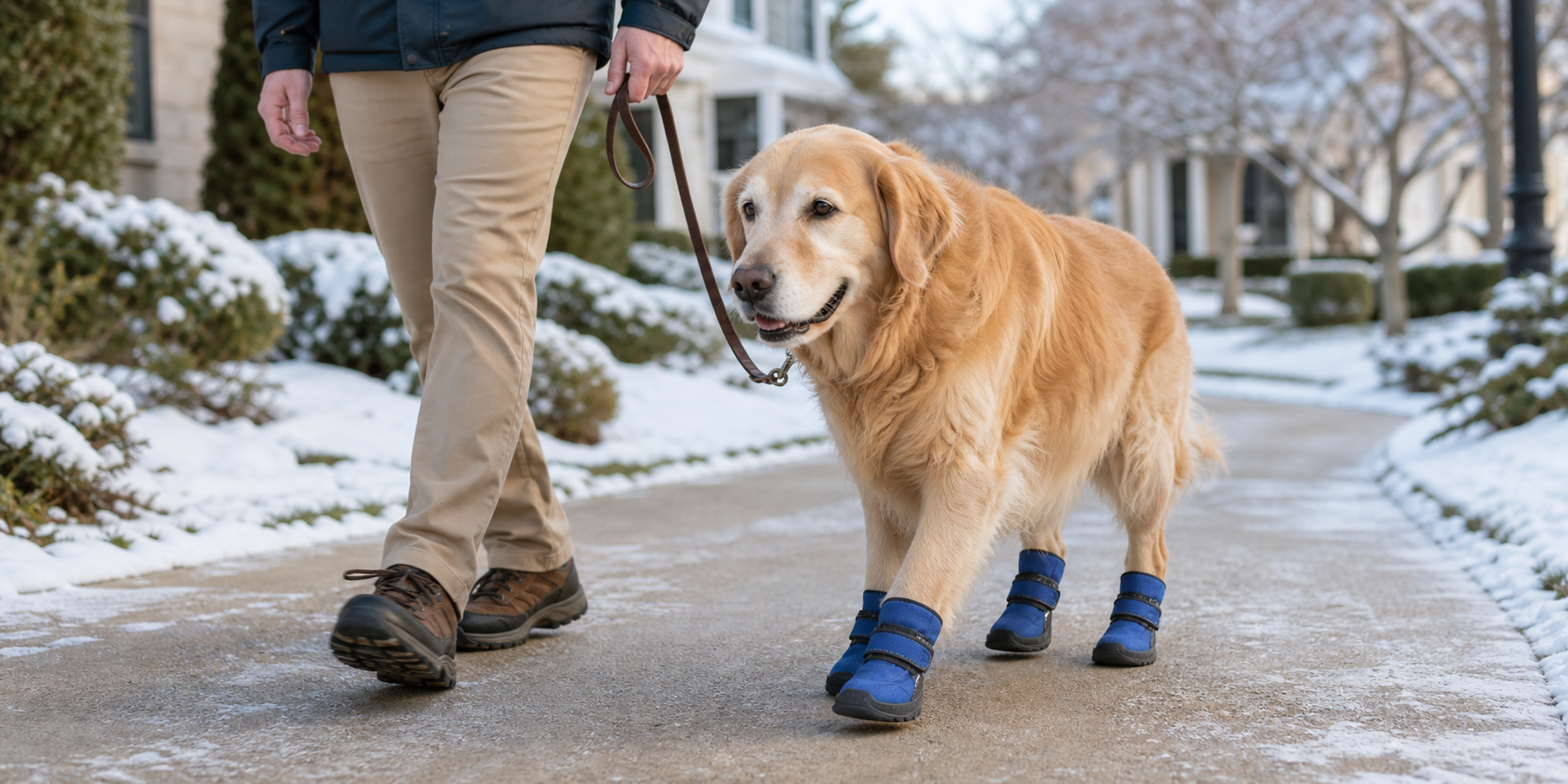
Winter changes the ground beneath your senior dog's feet. Cold pavement, sharp ice, hidden debris, wet snow, and deicing salt can irritate paw pads or make an already cautious dog less stable. Older dogs may also have arthritis, reduced balance, or health conditions that make cold exposure more demanding.
Good winter paw care for senior dogs is not about finding one piece of gear that makes every condition safe. It is a routine: check the weather and route, protect the paws when appropriate, keep outings within your dog's limits, clean and inspect every foot afterward, and know when a change requires veterinary care.
## Why Winter Can Be More Difficult for a Senior Dog
A healthy adult dog with a dense coat may enjoy cold weather that is uncomfortable for a small, short-haired, medically fragile, or older dog. The [American Animal Hospital Association's cold-weather guidance](https://www.aaha.org/resources/cold-safety-for-pets/) specifically identifies senior pets among those that can be more sensitive to cold and recommends short, frequent outings rather than prolonged exposure during extreme conditions.
Age can also change how a dog moves. Stiff joints may take longer to warm up, and reduced strength or vision can make slippery surfaces harder to navigate. A senior dog who once bounded through snow may now need a cleared route, slower pace, and earlier turnaround point.
There is no universal safe winter temperature for every dog. Breed, coat, body size, wind chill, moisture, fitness, and health all matter. Ask your veterinarian for individualized limits if your dog has arthritis, heart or lung disease, diabetes, poor circulation, recent surgery, or previous cold intolerance.
## Plan the Walk Before Opening the Door
Check more than the air temperature. Wind, wet snow, freezing rain, and shaded ice can make conditions more difficult than the forecast suggests. Walk during the brighter, warmer part of the day when possible, and choose a familiar route with cleared sidewalks and an easy way home.
Before each outing:
- Inspect your dog's paw pads, nails, and the skin between the toes.
- Look for cracks, redness, swelling, cuts, or a tender area.
- Check the route for black ice, deep snow, salt piles, and frozen water.
- Use a fixed-length leash near roads and icy ground.
- Bring a towel if snow, slush, or deicer is likely.
For many senior dogs, several brief bathroom and sniff walks are safer than one long winter walk. Turn around when your dog begins lifting a paw, shivering, slowing down, whining, searching for shelter, or losing coordination. Do not use boots or a mobility aid to push a tired dog farther than they would comfortably walk without them.
## When Dog Boots Can Help
Well-fitted boots create a physical barrier between the paws and cold ground, snow, grit, and treated sidewalks. The [AKC's paw-cleaning guidance](https://www.akc.org/expert-advice/health/clean-dog-paws/) notes that boots can help protect paws from ice and snow, although dogs often need time and positive reinforcement to adjust to wearing them.
A set of [tall winter dog boots](https://tendrapaw.com/products/tall-winter-dog-boots-set-of-4) can provide additional lower-leg coverage during short cold-weather outings. Boots should still be described realistically: they do not guarantee warmth, prevent frostbite, make black ice safe, or protect against every sharp object. Unless a manufacturer has verified the materials and construction, do not assume a boot is waterproof or insulated.
Boots may be especially useful on salted sidewalks or when snow packs between the toes. However, unfamiliar footwear can make some dogs less stable. Introduce boots cautiously if your senior dog has balance or neurologic problems, and seek professional guidance if their gait changes.
## Fit and Introduce Boots Carefully
Measure every paw while your dog is standing normally. Front paws are often wider than rear paws, so one measurement may not represent all four feet. Follow the actual manufacturer's chart rather than choosing by breed or body weight alone.
A suitable boot should stay on without pinching. Straps should be secure but should not leave deep marks, restrict circulation, or press over a sensitive joint. The dog should be able to place each foot naturally without twisting the boot.
Introduce footwear indoors on a nonslip surface:
1. Let your dog sniff one boot and reward calm interest.
2. Put on one boot for a brief period, then remove it.
3. Gradually add the remaining boots over several short sessions.
4. Practice walking indoors before going outside.
5. Recheck the fit after a few minutes of movement.
Some exaggerated stepping is common at first, but persistent stumbling, freezing, chewing, or distress means you should stop and reassess. After the walk, remove the boots, dry the paws, and inspect every strap and seam area.
## Road Salt and Deicers: Reduce Both Skin and Ingestion Risk
Products used to melt ice may contain sodium chloride, calcium chloride, potassium chloride, magnesium chloride, or other ingredients. They can irritate paw pads and skin, and a dog may swallow residue while licking their feet. The [ASPCA Animal Poison Control Center](https://www.aspca.org/news/tips-safely-using-de-icers-around-your-canine) warns that ingestion can cause gastrointestinal problems and, depending on the product and amount, more serious electrolyte disturbances.
The words "pet friendly" do not mean a product is harmless. The ASPCA notes that there are no specific labeling requirements for that phrase, so any deicer should be handled cautiously.
To reduce exposure:
- Avoid visible salt piles and treated slush when another route is available.
- Do not allow your dog to eat snow near streets, parking lots, or driveways.
- Use properly fitted boots or a veterinarian-approved paw protectant when appropriate.
- Store deicer containers where pets cannot reach them.
- Prevent paw licking until the feet have been cleaned.
- Contact a veterinarian or poison-control service promptly after suspected ingestion.
At home, use only the necessary amount of deicer, follow its label, and create a cleared pet route when possible. Even a lower-risk product may irritate a dog's paws or stomach.
## Make Post-Walk Paw Cleaning Automatic
Set up a small cleaning station near the entrance with a towel, a bowl or basin of lukewarm water, and good lighting. After every snowy or salted walk:
1. Remove the boots and inspect them for grit or damage.
2. Wipe or rinse each paw with lukewarm water.
3. Gently separate the toes and clean around the pads and nails.
4. Remove snow, salt, and small debris without scraping the skin.
5. Dry the paws and lower legs completely.
6. Check for redness, cracks, bleeding, swelling, or a new odor.
Ice balls can become tightly packed in long hair between the pads. Do not pull them out, because that can tug the hair and skin. The AKC recommends using a warm, damp towel to melt and loosen them. Ask a groomer or veterinary professional about safe trimming if ice accumulation is frequent; never cut blindly between the pads.
Keep nails maintained as advised by your veterinarian or groomer; AAHA notes that long nails can make slippery surfaces harder to navigate. Do not apply human lotions, essential oils, or medicated creams unless your veterinarian says they are safe if licked.
## A Recovery Boot Is Not a Winter Boot
A dog with a healing paw, bandage, or surgical site needs an individualized veterinary plan. A [protective dog paw recovery boot](https://tendrapaw.com/products/protective-dog-paw-recovery-boot) is intended as a single-paw protective cover for limited, supervised use. It should not be marketed or used as an all-weather winter boot, and it does not make a bandage safe to expose to snow, road salt, or prolonged moisture.
Ask the treating veterinarian whether the paw may go outside, how to keep any dressing dry, and when the cover must be removed. If a recovery boot becomes wet, shifts position, traps debris, or causes pressure, stop using it and follow the clinic's instructions. Never put a boot over an open wound or fresh incision without veterinary approval.
## Know the Signs That Need Prompt Attention
End the outing immediately if your senior dog persistently lifts a paw, limps, cries, refuses to move, or repeatedly tries to chew a foot. Indoors, inspect all four paws rather than assuming the problem is simply cold.
Contact your veterinarian for a cut, bleeding, a cracked pad, swelling, a torn nail, discharge, a strong odor, or lameness that continues after warming and rest. Sudden reluctance to walk can also reflect joint, spinal, neurologic, or other pain rather than a paw problem.
Frostbite requires urgent professional care. [VCA Animal Hospitals](https://vcahospitals.com/thumb-butte/know-your-pet/frostbite-in-dogs) lists pale, gray, or bluish skin, cold or brittle tissue, pain, swelling, blisters, and darkening tissue among possible signs. Changes may not be immediately obvious.
If frostbite is possible, move your dog indoors, contact a veterinarian promptly, and follow their directions. Use warm, never hot, water only if advised; do not rub or massage the area. Hypothermia signs such as weakness, confusion, slow breathing, severe lethargy, or persistent shivering also require immediate veterinary guidance.
## A Practical Winter Paw Checklist
Before the walk, confirm that:
- Conditions suit your senior dog's health and mobility.
- The route is short, familiar, and reasonably clear of ice.
- Boots fit securely without pinching, if they are being used.
- A towel and paw-cleaning supplies are ready at the door.
After the walk, confirm that:
- Salt, ice, and debris have been removed.
- The paws and lower legs are completely dry.
- No strap has caused rubbing or pressure.
- Your dog is walking and settling normally.
Winter walks do not need to be long to provide exercise, sniffing, and time together. A flexible routine, careful paw checks, and attention to your senior dog's changing comfort can make a short snowy outing safer and more enjoyable.
If the weather is too severe, replace the long walk with brief bathroom breaks and gentle indoor enrichment. The goal is not to conquer winter; it is to help your older companion move through it comfortably and return home with clean, dry, healthy paws.
*This article provides general educational information and is not a substitute for veterinary diagnosis, treatment, or emergency care.*
---
# Internal Links Used
- `tall winter dog boots` -> `https://tendrapaw.com/products/tall-winter-dog-boots-set-of-4`
- `protective dog paw recovery boot` -> `https://tendrapaw.com/products/protective-dog-paw-recovery-boot`
- Optional additional link: `senior dog mobility aids` -> `https://tendrapaw.com/collections/senior-mobility`
# Reference Sources
- [AAHA - Cold Weather Pet Safety Tips for Dogs and Cats](https://www.aaha.org/resources/cold-safety-for-pets/)
- [AAHA - Frosty Walks: How to Safely Walk Your Dog in the Winter](https://www.aaha.org/resources/frosty-walks-how-to-safely-walk-your-dog-in-the-winter/)
- [American Kennel Club - How to Clean and Care for Your Dog's Paws](https://www.akc.org/expert-advice/health/clean-dog-paws/)
- [American Kennel Club - Maintaining Dog Joint Health in Winter](https://www.akc.org/expert-advice/health/winter-joint-health-dogs/)
- [ASPCA - Cold Weather Safety Tips](https://www.aspca.org/pet-care/general-pet-care/cold-weather-safety-tips)
- [ASPCA Animal Poison Control Center - Tips for Safely Using De-Icers Around Your Canine](https://www.aspca.org/news/tips-safely-using-de-icers-around-your-canine)
- [VCA Animal Hospitals - Frostbite in Dogs](https://vcahospitals.com/thumb-butte/know-your-pet/frostbite-in-dogs)
- [VCA Animal Hospitals - Four Strategies for Cold Weather Paw Protection](https://vcahospitals.com/resources/conditions-dog/skin-coat/four-strategies-for-cold-weather-paw-protection)