
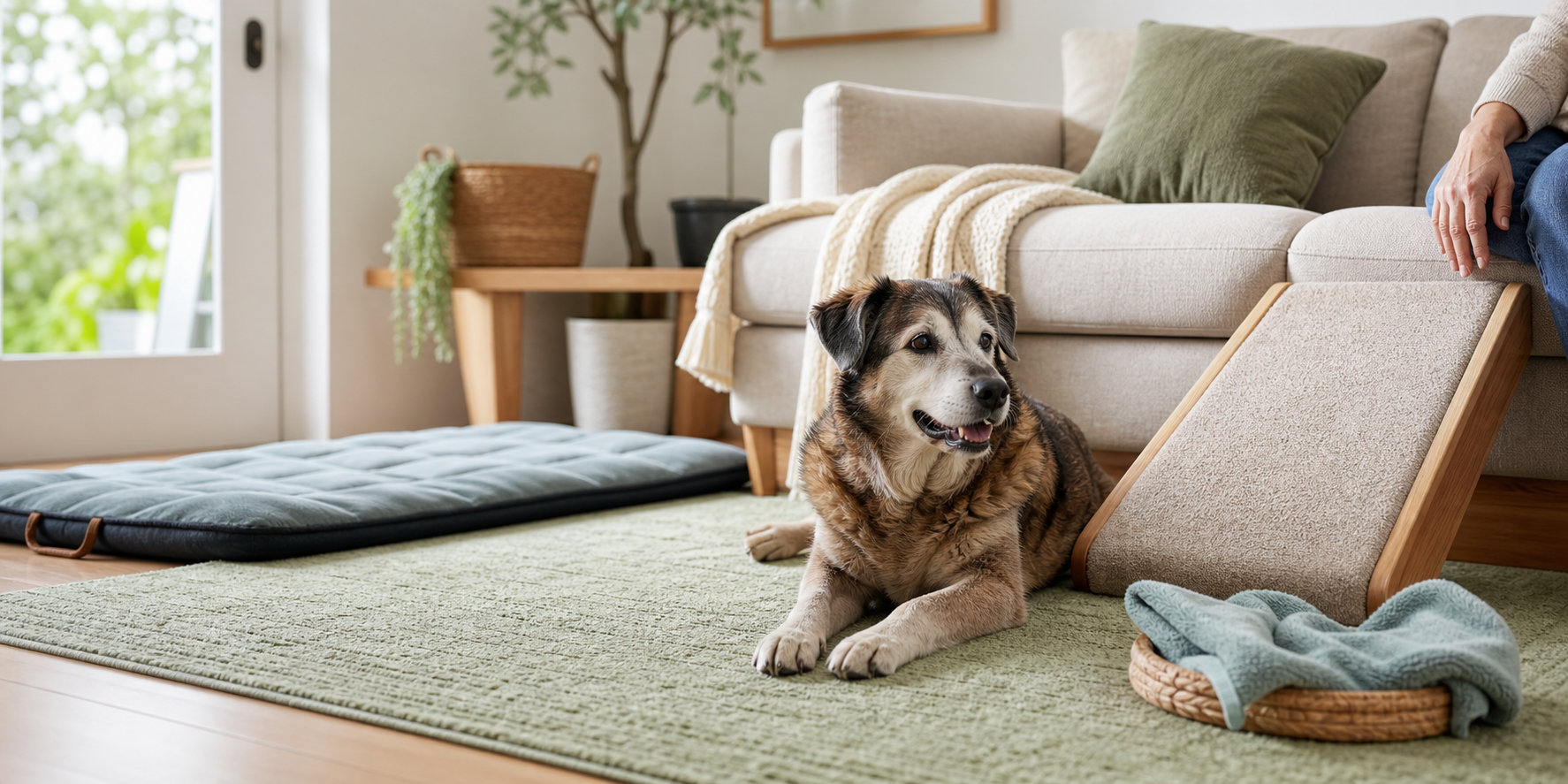
Hardwood floors can be beautiful for a home, but they can be surprisingly difficult for senior dogs. As dogs get older, they may lose muscle strength, confidence, balance, or paw traction. A floor that once felt normal can suddenly feel slippery and unsafe.
If your senior dog hesitates before crossing the room, slides when getting up, or avoids certain areas of the house, the floor may be part of the problem. The good news is that a few simple changes can help your dog move around with more comfort and confidence.
This guide covers practical, gentle ways to make hardwood floors safer for older dogs.
## Why Senior Dogs Slip on Hardwood Floors
Older dogs may slip for several reasons. Their paw pads can become smoother over time, their nails may touch the floor before their pads do, and their back legs may not be as strong as they used to be. Some dogs also become nervous after one bad slip, which makes them tense up and move less naturally.
Slipping is not something to dismiss as simply "getting old." Changes in mobility can be associated with pain, weakness, vision changes, or other conditions that deserve a veterinary conversation. The American Animal Hospital Association (AAHA) specifically includes changes in mobility, trouble with stairs, stiffness, dragging the back feet, and reluctance to do normal activities among signs worth discussing with a veterinary team.[^1]
Common signs include:
- Sliding when standing up
- Back legs splaying outward
- Hesitating at doorways or open floor areas
- Avoiding rooms with wood or tile floors
- Walking slowly with stiff, careful steps
- Looking anxious when turning or stopping
If slipping appears suddenly, or if your dog seems painful, weak, or confused, it is best to speak with your veterinarian. Home changes can improve comfort and traction, but they should not replace veterinary care when something more serious is going on.
## 1. Keep Nails Trimmed
Long nails are one of the most common reasons dogs lose traction. When nails touch the floor first, the paw pads cannot grip properly. This can make hardwood feel like ice, especially for older dogs.
Regular nail trims can make a big difference. If your dog dislikes nail trimming, try short sessions, gentle handling, and plenty of rewards. You can also ask a groomer or veterinarian to help.
Do not cut too much at once. For dogs with dark nails, it can be hard to see the quick, so small trims are safer.
## 2. Trim Fur Around the Paw Pads
Some dogs grow long fur between their paw pads. On hardwood floors, this fur can act like a slippery layer between the pad and the floor.
Carefully trimming the fur around the paw pads can help the pads make better contact with the ground. If you are not comfortable doing this yourself, a groomer can usually do it quickly.
## 3. Add Rugs or Runners in High-Traffic Areas
One of the easiest ways to help a senior dog is to create safe walking paths. Add rugs, runners, or non-slip mats in the areas your dog uses most.
Good places to add traction include:
- Beside the bed
- Near the sofa
- In hallways
- Around food and water bowls
- At doorways
- Near stairs
- Around favorite resting spots
Choose rugs with non-slip backing, or use a rug pad underneath. A sliding rug can be just as risky as a slippery floor.
This is more than a convenient home hack. AAHA senior-care guidance includes rugs or yoga mats for better footing, and UC Davis recommends area rugs in places where an older pet needs to walk or eat on smooth floors.[^2][^3]
## 4. Help Your Dog Stand Up Safely
Many senior dogs slip most when they are trying to stand up. Their back legs may push outward, especially on smooth floors.
You can help by placing a rug or mat under their resting area. If your dog sleeps on a bed, blanket, or cushion, make sure the first step down lands on a non-slip surface.
For dogs who need extra help, a supportive harness or lift aid may be useful for short moments like standing, climbing into the car, or moving across difficult areas.
## 5. Consider Anti-Slip Socks or Paw Support
Anti-slip dog socks can help some senior dogs get better traction on hardwood floors. Look for socks designed for pets, with grippy material on the bottom and a comfortable fit around the leg.
The best anti-slip support should:
- Stay in place without being too tight
- Have traction on the bottom
- Feel soft and breathable
- Allow your dog to walk naturally
- Be easy to put on and remove
Some dogs need time to get used to socks. Start with short sessions and reward calm walking. Never force your dog to wear something that causes stress or restricts movement.
Socks, boots, toe grips, and supportive harnesses are tools, not cures. AAHA lists them as examples of accessories that may improve footing or assist with lifting, but the right choice depends on the dog and the underlying mobility issue.[^2]
## 6. Make Food and Water Areas Safer
Dogs often slip near food and water bowls because the area can get wet. For a senior dog, even a small splash can create a risky spot.
Try placing bowls on a non-slip mat. Keep the area dry and choose a stable bowl setup that does not slide when your dog eats.
If your dog bends awkwardly to eat, talk to your veterinarian about whether a raised feeding setup is appropriate. It can help some dogs, but it is not right for every dog.
## 7. Slow Down Excited Moments
Senior dogs may still get excited when someone comes home, when they see a leash, or when food is served. Excited movement on hardwood can lead to slips.
Try to keep high-energy moments on rugs or carpeted areas. You can also place a mat near the door so your dog has a safe place to stand when greeting family members.
## 8. Create a Senior Dog Safe Zone
If your dog has a favorite room, make that area especially safe. Add soft bedding, stable rugs, easy access to water, and a clear path to the door.
A good senior dog safe zone should be:
- Easy to enter and exit
- Free of clutter
- Away from slippery transitions
- Comfortable for resting
- Close to family activity
The goal is not to limit your dog. It is to give them a place where movement feels predictable and safe.
## 9. Watch for Pain or Mobility Changes
Slipping can sometimes be a sign of discomfort, weakness, joint stiffness, vision changes, or neurological issues. If your dog suddenly starts slipping more often, has trouble standing, drags their paws, or seems painful, schedule a veterinary visit.
Helpful home products can support comfort and safety, but they should be part of a bigger care plan when mobility changes are noticeable.
## 10. Be Patient and Gentle
For senior dogs, confidence matters. A dog who has slipped before may be afraid to move quickly. Encourage your dog with a calm voice, slow routines, and safe footing.
Avoid pulling your dog across a slippery area. Instead, guide them toward a rug, mat, or safer path. Small changes can help your dog feel more secure day by day.
## Final Thoughts
Helping a senior dog walk on hardwood floors does not have to be complicated. Start with the basics: nail care, paw pad fur trimming, non-slip rugs, dry feeding areas, and gentle traction support.
Every dog is different. Some dogs only need a few rugs. Others may benefit from anti-slip socks, support harnesses, or a more complete home setup. The best approach is the one that helps your dog move with less fear and more comfort.
At TendraPaw, we believe senior dogs deserve a home that feels safe, soft, and supportive. Small adjustments can help them keep enjoying the everyday moments they love most.
## Sources and further reading
[^1]: [AAHA, Home Monitoring Tips for Senior Pets](https://www.aaha.org/wp-content/uploads/globalassets/02-guidelines/2023-aaha-senior-care-guidelines-for-dogs-and-cats/resources/aaha-senior-care-guidelines-your-senior-pet.pdf)
[^2]: [AAHA, Pain Management: 2023 Senior Care Guidelines](https://www.aaha.org/resources/2023-aaha-senior-care-guidelines-for-dogs-and-cats/pain-management/)
[^3]: [UC Davis School of Veterinary Medicine, Helping Senior Pets Thrive](https://synergy.vetmed.ucdavis.edu/fall-2022-news-articles/helping-senior-pets-thrive)
## FAQ
### Why does my senior dog suddenly slip on hardwood floors?
Senior dogs may slip because of long nails, smooth paw pads, reduced muscle strength, joint stiffness, or anxiety after a previous fall. Sudden changes should be discussed with a veterinarian.
### Do anti-slip dog socks work on hardwood floors?
Anti-slip dog socks can help some dogs by adding traction between the paw and the floor. Fit and comfort are important, and dogs may need time to adjust.
### Are rugs enough to stop a senior dog from slipping?
Rugs and runners can help a lot, especially in high-traffic areas. Make sure they have non-slip backing or a secure rug pad.
### Should I use paw wax for traction?
Paw wax may help some dogs temporarily, but results vary. It can also wear off quickly. Rugs, nail care, and anti-slip support may be more reliable for daily use.
### When should I call a vet?
Call a veterinarian if slipping starts suddenly, your dog seems painful, has trouble standing, drags their paws, falls often, or shows major changes in movement.