
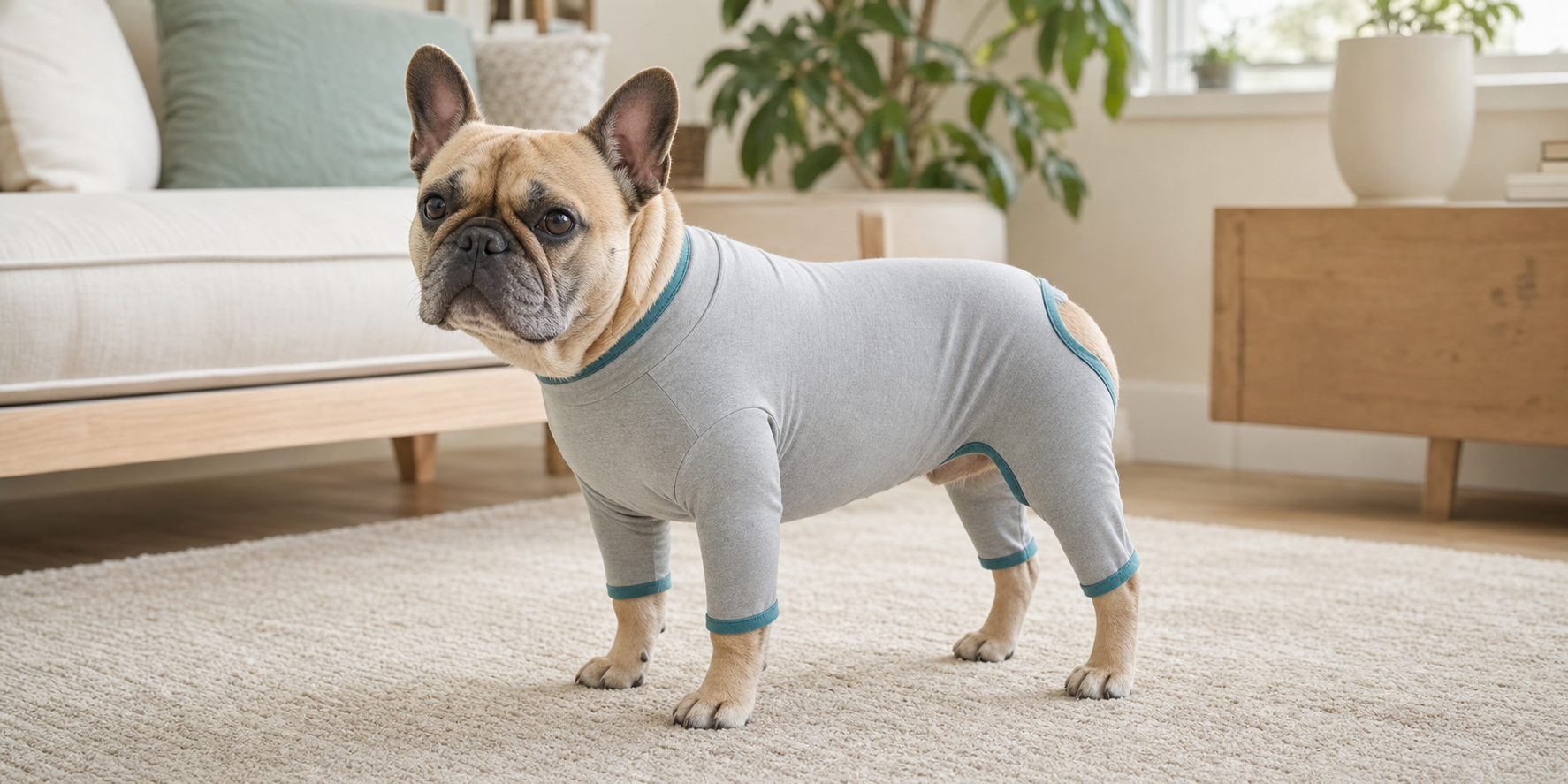
A recovery suit can provide a comfortable physical barrier over certain areas of a dog’s body, but only when the fit and daily care are right. Too small, it can rub or restrict movement; too large, it can twist, expose the intended area, or become a tripping hazard.
This guide explains how to measure, dress, and check your dog. Before using a garment near an incision, wound, bandage, or medical device, ask the treating veterinarian whether it is appropriate for that location.
## First Decide Whether a Recovery Suit Is Suitable
Recovery suits work best when they completely cover the intended area and stay positioned as the dog walks, lies down, and turns. A [breathable dog recovery suit](https://tendrapaw.com/products/breathable-dog-recovery-suit) may suit some torso areas, but suitability depends on the procedure and the garment’s design.
[VCA Animal Hospitals’ surgical-incision guidance](https://vcahospitals.com/know-your-pet/care-of-surgical-incisions-in-dogs) notes that a garment may be an alternative for some locations and recommends veterinary guidance. A suit is not a bandage, sterile dressing, or treatment, and it does not prevent infection or speed healing.
A recovery suit may not be the right primary barrier when:
- The affected area is on the face, ear, eye, paw, lower leg, or tail
- The garment does not fully cover the area
- Your dog can lick or chew through the fabric
- A drain, catheter, external hardware, or bulky bandage is present
- The fabric presses against the incision or traps moisture
- Your veterinarian specifically instructed you to use a cone
Follow the clinic’s instructions even if another option appears more comfortable.
## How to Measure a Dog for a Recovery Suit
Use the chart for the exact product. Size labels are not standardized, so body measurements—not breed or weight alone—should guide the choice.
Use a flexible cloth tape while your dog stands naturally. Measure over the coat without pulling tight; a second person can help your dog remain calm.
### 1. Measure the back length
Measure from the base of the neck, where the shoulders begin, to the base of the tail. Keep the tape level along the back.
Too short, and the suit may pull at the neck or groin; too long, and fabric may bunch or become soiled.
### 2. Measure the chest girth
Wrap the tape around the widest part of the rib cage, usually behind the front legs. Keep it level. Chest girth affects breathing room, shoulder movement, and shifting, so never subtract inches for a tighter fit.
### 3. Measure the neck circumference
Measure around the lower neck where the neckline will sit. Too loose can allow shifting; too tight can press or rub.
### 4. Check any product-specific measurements
A four-leg suit may also require leg circumference, sleeve length, waist, or belly measurements. Measure exactly where the chart shows. Unusual body shapes or between-size measurements may require seller guidance.
If measurements fall into different size columns, follow the manufacturer’s instructions or ask before ordering. Never automatically size up to accommodate a bandage; first consult the veterinarian and seller.
## What a Proper Recovery Suit Fit Looks Like
A good fit is close enough to stay positioned but not compressive. The fabric should lie mostly smooth over the body without deep horizontal creases, stretched seams, gaping openings, or loose panels near the legs.
As a quick screening check, you should generally be able to slide a finger or two beneath fitted edges without forcing them. Follow the product’s instructions; thick coats make this test less reliable. Your dog should breathe normally and stand, walk, sit, lie down, and turn without pulling.
The [PDSA’s veterinarian-written protective-wear guidance](https://www.pdsa.org.uk/pet-help-and-advice/pet-health-hub/other-veterinary-advice/how-to-put-a-cone-collar-on-your-dog) recommends a snug but not tight fit, complete coverage, clean and dry fabric, and suitable openings for toileting.
Look closely at these high-friction areas:
- Neckline
- Armpits and front-leg openings
- Groin and rear-leg openings
- Sleeve cuffs
- Belly closure
- Tail opening
- Any seam that passes over or near the sensitive area
Red marks, an indentation that remains after removal, pinched skin, restricted steps, coughing, or unusual breathing mean the fit needs immediate attention.
## How to Put the Recovery Suit On
Choose a quiet room with a nonslip floor. A second person can support a senior dog and reduce prolonged one-leg balancing. Never lift or drag a dog by the suit.
1. **Open every closure first.** Identify the neck, front, rear, and inner surface before approaching your dog.
2. **Let your dog inspect the suit.** Offer calm praise or a treat if permitted under the veterinary care plan.
3. **Guide the head or front section into place.** Follow the product design and avoid bending the neck sharply.
4. **Insert one leg at a time.** Support the limb close to the body and never pull on a sore joint. Stop if your dog resists or shows pain.
5. **Bring the fabric over the torso.** Smooth it gently instead of tugging from one end.
6. **Place the rear legs and tail opening.** Confirm that no fur or skin is caught in a seam or fastener.
7. **Secure the closures.** Fasten them evenly, then recheck the neckline, chest, belly, cuffs, and rear opening.
8. **Complete a movement test.** Let your dog take several steps, turn, sit, and lie down while you watch closely.
Briefly unusual steps can occur with a new garment, but persistent distress, falling, restricted movement, or pain are reasons to remove it and contact the veterinarian.
## Check Coverage and Bathroom Access
Confirm that the intended area remains covered when your dog curls up, stretches, and walks. If the fabric shifts away after a few steps, the suit may be the wrong size or shape. Coverage that only works while the dog stands still is not reliable protection.
Before every bathroom trip, arrange the rear flap exactly as the product directs. Do not assume a unisex opening fits every dog’s anatomy. Watch the first several bathroom breaks to confirm that urine and stool do not contact the garment.
If the suit becomes damp or soiled, replace it promptly with a clean, dry one. Keeping a second suit available can make washing and drying easier. Do not place a wet garment back on the dog.
## Perform a Twice-Daily Skin and Incision Check
A garment hides the skin, so it must be removed regularly for inspection. PDSA advises removing a protective suit at least twice daily to check the wound, while fully preventing the dog from reaching the area during the check. Follow your clinic’s schedule if it is more frequent.
When the suit is off, inspect both the covered area and the places where fabric touches the body. Look for moisture, rubbing, swelling, worsening redness, discharge, odor, damaged closures, or missing sutures. Check that the suit itself is clean, dry, and free from chewing damage.
VCA advises keeping surgical incisions dry, preventing licking and scratching, and contacting the veterinarian for continuous fluid or blood seepage, excessive redness, swelling, foul odor, discharge, or removed sutures. Do not apply creams, disinfectants, alcohol, hydrogen peroxide, or other products unless the veterinarian specifically instructed you to do so.
## When a Cone May Still Be Needed
A recovery suit is only effective if it blocks access. Some dogs can bite through fabric, push a nose under the neckline, or reach the area through a bathroom opening. Others become more persistent when left alone.
Use the veterinarian-recommended cone when the suit fails the coverage test, the affected area cannot be enclosed safely, the garment must be removed for drying, or your dog chews at it. A properly fitted [soft protective recovery collar for dogs and cats](https://tendrapaw.com/products/soft-protective-recovery-collar-for-dogs-cats) may be an option for some dogs, but soft and inflatable designs do not block every body area. Test reach before relying on one and obtain veterinary approval.
The [VCA post-operative instructions](https://vcahospitals.com/veterinary-care/primary/know-your-pet/post-operative-instructions-in-dogs) emphasize using the prescribed cone or recovery suit to prevent chewing. A few unsupervised seconds can be enough for a determined dog to interfere with an incision, so do not remove protective equipment simply because the dog appears calmer.
## Extra Comfort Checks for Senior Dogs
Older dogs may have arthritis, reduced balance, thinner skin, incontinence, or less ability to regulate body temperature. These factors do not automatically rule out a suit, but they make close observation especially important.
- Dress the dog on a nonslip surface and avoid forcing stiff joints.
- Recheck armpits and groin areas more often for friction.
- Keep the fabric dry after accidents or bathroom breaks.
- Watch for panting or restlessness in a warm room.
- Confirm the dog can rise from bed and walk without catching a paw in a loose sleeve.
- Ask for help if dressing requires painful or unstable positions.
New weakness, repeated falling, severe reluctance to move, or sudden behavior change should be discussed with the veterinarian rather than attributed only to age or unfamiliar clothing.
## A Quick Fit Checklist
Before leaving the suit in place, confirm:
- The veterinarian approves a suit for this location
- The size matches current body measurements
- Breathing and movement look normal
- Neck, chest, legs, and groin are not compressed
- The intended area stays completely covered during movement
- Seams and closures do not rub the sensitive area
- Bathroom openings work for your dog’s anatomy
- The fabric is clean and dry
- Your dog cannot lick or chew through or around it
- You have a plan for supervised checks and a backup cone if needed
The right suit stays positioned, allows normal basic movement, and makes inspection straightforward. Measure carefully, watch your dog in motion, and seek veterinary guidance if comfort, skin condition, or incision appearance changes.
*This article provides general educational information and is not a substitute for veterinary diagnosis, treatment, or post-operative instructions.*
---
# Internal Links Used
- `breathable dog recovery suit` → `https://tendrapaw.com/products/breathable-dog-recovery-suit`
- `soft protective recovery collar for dogs and cats` → `https://tendrapaw.com/products/soft-protective-recovery-collar-for-dogs-cats`
- Optional additional link: `recovery wear for dogs` → `https://tendrapaw.com/collections/recovery-wear`
# Reference Sources
- [VCA Animal Hospitals — Care of Surgical Incisions in Dogs](https://vcahospitals.com/know-your-pet/care-of-surgical-incisions-in-dogs)
- [VCA Animal Hospitals — Alternatives to the Elizabethan Collar](https://vcahospitals.com/resources/lifestyle-dog/supplies/alternatives-to-the-elizabethan-collar)
- [VCA Animal Hospitals — Post-Operative Instructions in Dogs](https://vcahospitals.com/veterinary-care/primary/know-your-pet/post-operative-instructions-in-dogs)
- [PDSA — How to Put a Cone Collar on Your Dog: Cones, Recovery Suits, and Other Options](https://www.pdsa.org.uk/pet-help-and-advice/pet-health-hub/other-veterinary-advice/how-to-put-a-cone-collar-on-your-dog)
- [AAHA — Beyond Closure: Postsurgical Wound Care](https://www.aaha.org/trends-magazine/august-2022/gs-wound-care/)