
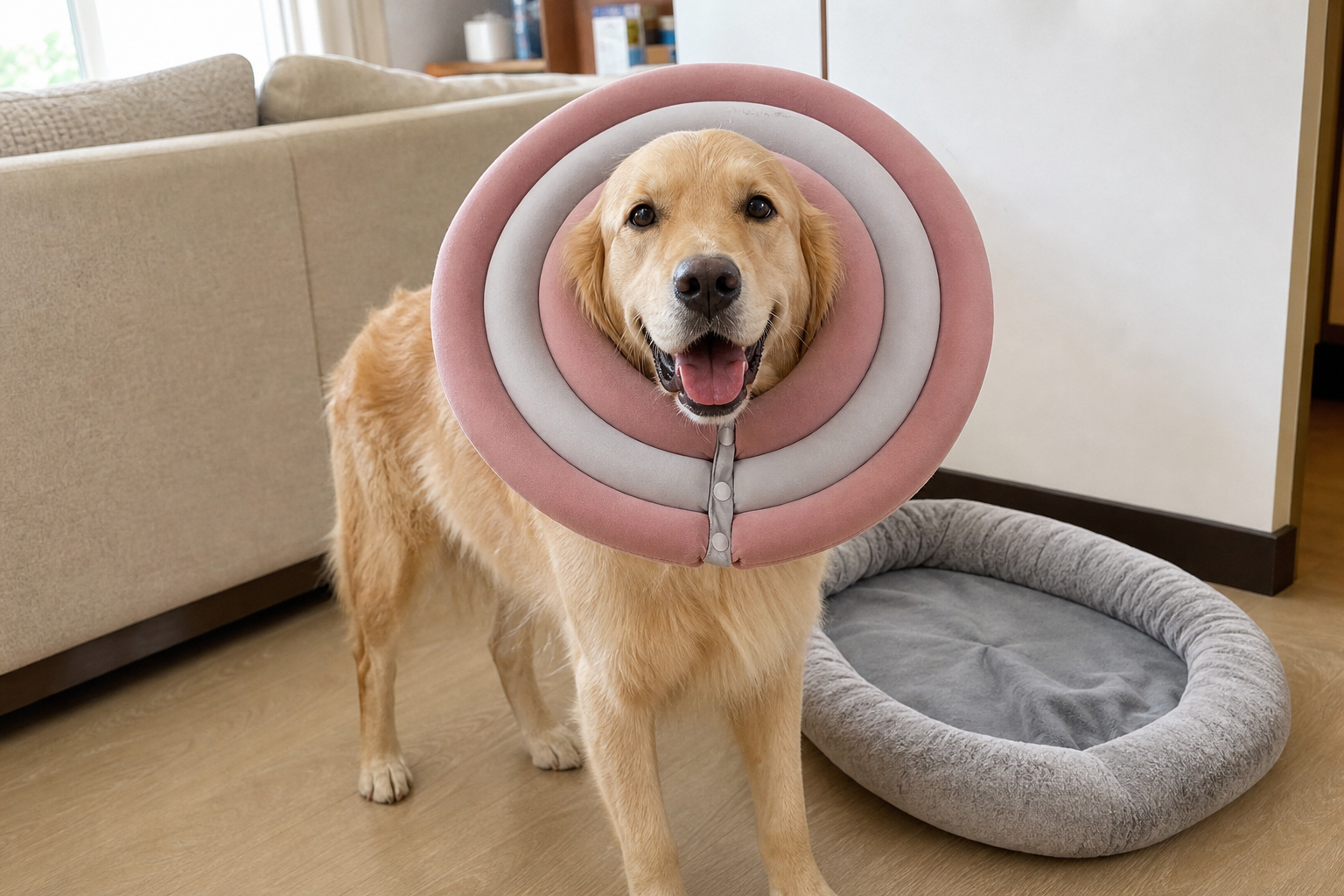
Few things make a dog look more miserable than a plastic cone. They bump into chair legs, misjudge doorways, and sometimes stand frozen as though the whole living room has become a puzzle.
It is understandable to look for a kinder option. But the first question is not, "Which alternative is most comfortable?" It is, "Can this option reliably keep my dog away from the incision?"
That matters because licking, chewing, or scratching a healing incision can damage the site, delay healing, and raise the risk of infection. The American College of Veterinary Surgeons notes that protective devices should be selected by the veterinary team based on the incision location and the individual pet.[^1] In other words, there is no one cone alternative that is right for every surgery.
This guide can help you understand the common options and have a better conversation with your veterinarian. It does not replace your discharge instructions, which should always come first.
## Why Dogs Need a Cone in the First Place
Dogs do not understand that stitches, staples, or a healing wound need to be left alone. Licking may seem harmless, especially when a dog only does it for a few seconds. In reality, even brief access can be enough for a determined dog to pull at sutures or irritate a fresh incision.
An Elizabethan collar, often called an E-collar or cone, creates a physical barrier. For full protection, VCA Animal Hospitals explains that the edge of the cone needs to extend slightly beyond the dog's muzzle, so the dog cannot turn around and reach the body with its mouth.[^2]
That is why a traditional cone is still the safest option for some dogs and some incision sites. An alternative is only a good alternative when it actually prevents access.
## Option 1: A Soft Fabric Cone
A soft cone has the same basic shape as a plastic cone but uses padded or flexible fabric. It can be quieter and gentler when a dog bumps into furniture, and some dogs find it easier to settle in.
It may be worth asking about when:
- Your dog needs the reach-blocking shape of a cone.
- The incision is in a location a soft cone can still protect.
- Your dog is calm and is not able to fold or push past the material.
The limitation is important: a flexible cone may bend enough for a determined or very agile dog to reach around it. VCA notes that some dogs can maneuver around soft material and still lick or remove sutures.[^2] Before relying on one, watch your dog closely and ask your veterinary team to confirm the fit.
## Option 2: A Recovery Suit
A recovery suit is a close-fitting garment that covers part of the body, a bit like a dog-specific onesie. It can be a practical choice for some abdominal, chest, or torso incisions. It may also feel less visually disruptive than a cone for dogs who become stressed by limited peripheral vision.
The catch is that location changes everything. A suit will not protect every part of the body, and it can be unsuitable for wounds that need a different kind of access or monitoring. It also has to stay clean, dry, and comfortably fitted. VCA advises that recovery garments should not be too tight and that wounds need oxygen to heal.[^3]
Ask your veterinarian before choosing a suit, especially if the incision is near the legs, tail, groin, paws, ears, or face.
## Option 3: An Inflatable Neck Collar
Inflatable collars look like travel pillows. They can leave a dog with more peripheral vision and may make eating, drinking, and resting easier for some pets.
They are not full replacements for a cone in every situation. A long-necked dog, a flexible dog, or a dog with a rear-body incision may still be able to reach the protected area. VCA describes a neck pillow as an option that limits head turning, but its suitability depends partly on the part of the body that needs protection.[^2]
Think of an inflatable collar as a possible fit-dependent tool, not as a universally safer or more comfortable answer.
## Option 4: A T-Shirt or Simple Covering
For a very limited number of incision locations, a clean T-shirt may provide enough coverage. This is sometimes mentioned for torso wounds, but it should not be treated as a DIY solution for every surgery.
It can shift, get damp, rub the incision, or leave access through the neck or leg openings. It is also unlikely to prevent a dog from scratching with a hind foot. If your veterinarian says a T-shirt is acceptable, ask exactly how it should fit and how often it should be changed.
## How to Decide Which Option Is Right
Use this simple test: can your dog reach, lick, chew, or scratch the healing site while wearing it?
If the answer is yes, the option is not protective enough. Comfort matters, but protection comes first during the healing window.
Before you switch from the cone, consider:
- Where the incision is located
- How flexible and persistent your dog is
- Whether your dog can scratch the area with a hind foot
- Whether the garment or collar stays clean and dry
- Whether your dog can eat, drink, rest, and toilet normally
- What your surgeon or veterinarian specifically recommended
For a fresh incision, do not trial a new device unsupervised. Observe your dog first. If they can reach the site even once, go back to the protective device your veterinary team advised and contact them for guidance.
## Tips That Can Make a Standard Cone Easier
Sometimes the best answer is still the cone, with a few small changes around it.
Create more space around food and water bowls so the cone does not catch on the edge. Keep pathways clear. A quiet room with fewer tight corners can make the first day less frustrating. If your dog has trouble eating, VCA suggests temporarily removing the cone only while you are actively supervising the meal, then putting it back on right away.[^3]
Fit matters too. The collar should be secure but not restrictive. Check the neck daily for rubbing or irritation, and follow the fitting advice given by your clinic.
## When to Call the Vet
Contact your veterinary team promptly if the incision opens, becomes increasingly red or swollen, develops discharge or a bad smell, or if your dog has removed sutures or staples. Also call if your dog can reach the incision despite the device, or if they are too distressed to eat, drink, or rest.
Do not apply creams, sprays, hydrogen peroxide, alcohol, or other products to a surgical incision unless your veterinarian has specifically told you to do so.[^1]
## The Bottom Line
The best dog cone alternative is not the one that looks nicest or seems most comfortable at first glance. It is the one your veterinarian approves and that truly keeps your dog from reaching the healing site.
For some dogs, that will be a soft cone. For others, a recovery suit or inflatable collar may work well. And for many fresh or hard-to-protect incisions, the familiar plastic cone remains the most reliable choice for a short but important stretch of recovery.
At TendraPaw, we focus on recovery essentials that support calmer, more manageable routines. For any surgical recovery product, choose fit, cleanliness, and veterinary guidance over convenience.
## FAQ
### Can I take my dog's cone off at night?
Only if your veterinarian has said it is safe and you can fully supervise your dog. Dogs may lick or chew an incision very quickly, including while you are asleep.
### Is a recovery suit better than a cone?
Neither is automatically better. A recovery suit can work for certain incision locations, but it cannot protect every wound. The right choice depends on where the incision is and whether your dog can still reach it.
### Can my dog wear an inflatable collar after surgery?
Possibly, but it must prevent your dog from reaching the incision. Ask your veterinarian and test the fit under close supervision before relying on it.
### Why is my dog trying to lick the incision?
Dogs may lick because the area feels unfamiliar, itchy, or uncomfortable. It does not mean the incision is healing normally, so keep it protected and ask your veterinarian about any concerns.
## Sources and further reading
[^1]: [American College of Veterinary Surgeons, Postoperative Care After Surgery](https://www.acvs.org/small-animal/postoperative-care-after-surgery-what-animal-owners-should-expect/)
[^2]: [VCA Animal Hospitals, Elizabethan Collars in Dogs](https://vcahospitals.com/vitality/know-your-pet/dog-behavior-problems-elizabethan-collars)
[^3]: [VCA Animal Hospitals, Alternatives to the Elizabethan Collar](https://vcahospitals.com/resources/lifestyle-dog/supplies/alternatives-to-the-elizabethan-collar)