
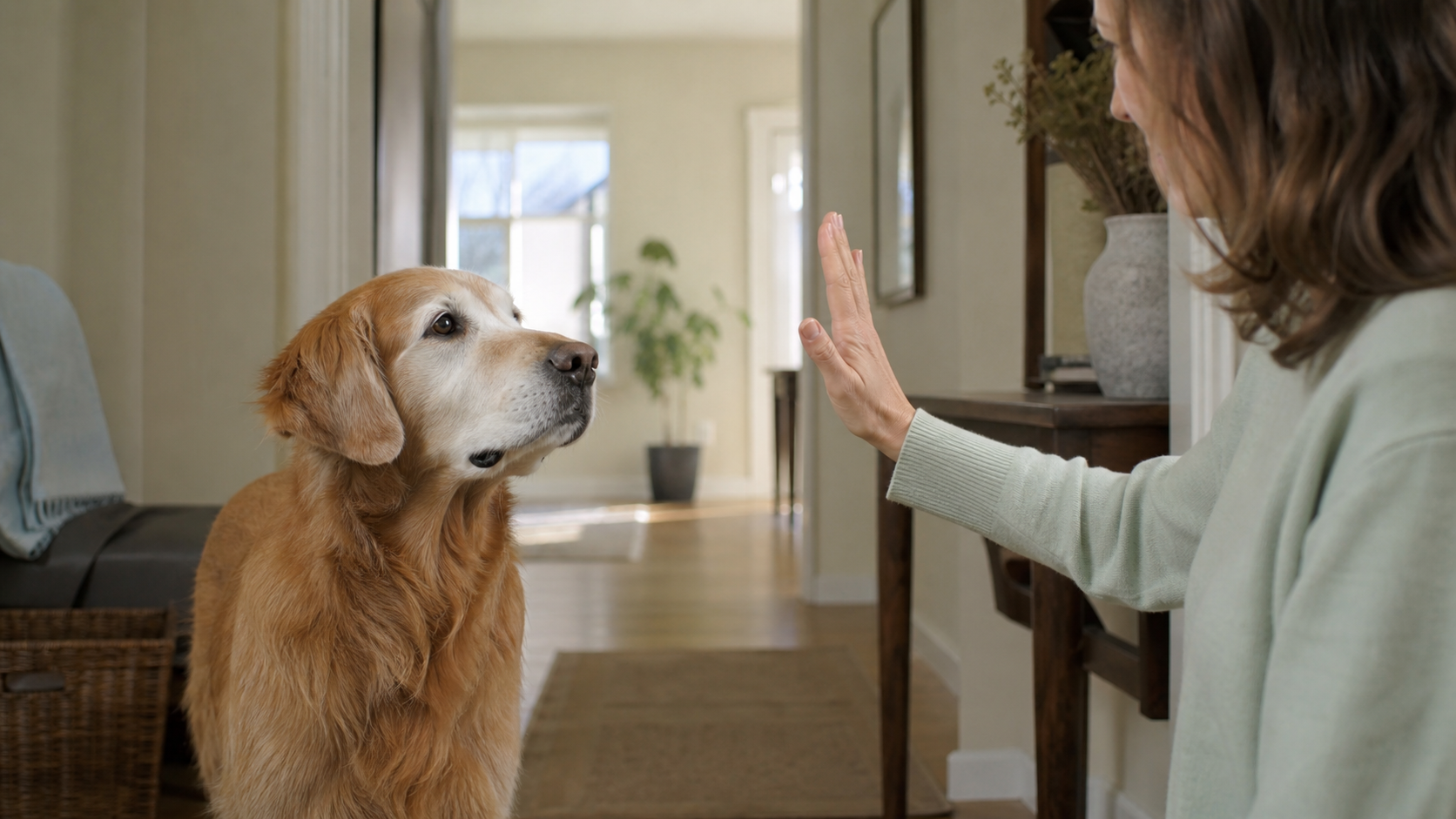
Your senior dog may not be “ignoring” you
They used to hear the treat jar from two rooms away. Now you call their name and get nothing—until you step into view. Or they wake with a start when touched, hesitate at dusk, or seem unusually unsure in a familiar room.
It is tempting to label that as stubbornness. With an older dog, it is often smarter to treat it as information.
Hearing and vision changes can be gradual, and dogs are remarkably good at compensating. A pet can seem perfectly normal in a familiar layout while relying more heavily on routine, scent, vibration, and your body language than you realize. [AAHA notes](https://www.aaha.org/resources/living-with-a-blind-or-deaf-pet-tips-from-the-vet/) that sensory loss does not prevent a pet from having a good quality of life, but it does call for deliberate communication and safety habits.
## The small changes owners often miss
No single behavior proves hearing or vision loss. But a useful pattern can include:
- Not responding when you speak from behind or another room
- Starting easily when awakened or touched unexpectedly
- Following familiar routes confidently but hesitating in new spaces or dim light
- Misjudging a step, doorway, or object that has moved
- Becoming less comfortable around unfamiliar people or dogs
- Watching you more closely for visual cues
These signs deserve attention, not a home diagnosis. Ear disease, eye conditions, pain, neurologic issues, cognitive changes, and other medical problems can overlap in the way they look at home. A veterinarian can help sort out what belongs in the conversation.
## Make the home easier before the appointment
The goal is not to “test” your dog by startling them or rearranging the room. The goal is to make daily life predictable while you observe.
- Keep furniture and walkways consistent when possible.
- Say the dog’s name or make a gentle floor vibration before touching them.
- Let them see your approach; avoid leaning over a resting dog without warning.
- Pair simple verbal or hand cues with rewards they enjoy.
- Keep stairs, thresholds, and dim areas well monitored for safety.
- Give them extra time in unfamiliar places instead of pulling or rushing them.
Positive, low-pressure handling matters. AAHA’s behavior guidance emphasizes understanding the reason behind a behavior change and avoiding punishment-based responses that can worsen fear or stress. [AAHA’s behavior resources](https://www.aaha.org/resources/behavior-management-for-pets/) are a helpful reminder that a new reaction is a cue to investigate—not a reason to shame a dog.
## What to write down for your veterinarian
For one week, make a short note when you see a change:
- Time of day and lighting
- Whether the space was familiar or new
- What cue the dog missed or reacted to
- Whether there was touching, another animal, a loud noise, or a step involved
- Any accompanying changes in sleep, appetite, mobility, toileting, or anxiety
That timeline is often more useful than trying to recreate the moment in the clinic.
## When this should move up the priority list
Contact your veterinarian promptly if the change is new, worsening, or affecting daily confidence. Seek urgent veterinary guidance for sudden vision loss, a painful/squinting/red eye, a marked loss of balance, head tilt, collapse, or a sudden major change in responsiveness.
The biggest takeaway: do not make your senior dog prove they can still cope. Make the environment easier, notice the pattern, and get qualified advice early.
## Sources
1. American Animal Hospital Association. [Living With a Blind or Deaf Pet: Tips From the Vet](https://www.aaha.org/resources/living-with-a-blind-or-deaf-pet-tips-from-the-vet/).
2. American Animal Hospital Association. [Behavior Management for Pets](https://www.aaha.org/resources/behavior-management-for-pets/).
3. American Animal Hospital Association. [Age and Behavior](https://www.aaha.org/resources/2015-aaha-canine-and-feline-behavior-management-guidelines/age-and-behavior/).
4. Cornell University College of Veterinary Medicine. [Senior Dog Dementia](https://www.vet.cornell.edu/departments-centers-and-institutes/riney-canine-health-center/canine-health-information/senior-dog-dementia).
## Medical Disclaimer
This article is general educational information, not a diagnosis or veterinary treatment plan. New, sudden, or worsening changes in your dog’s vision, hearing, balance, behavior, or comfort should be discussed with a licensed veterinarian.