
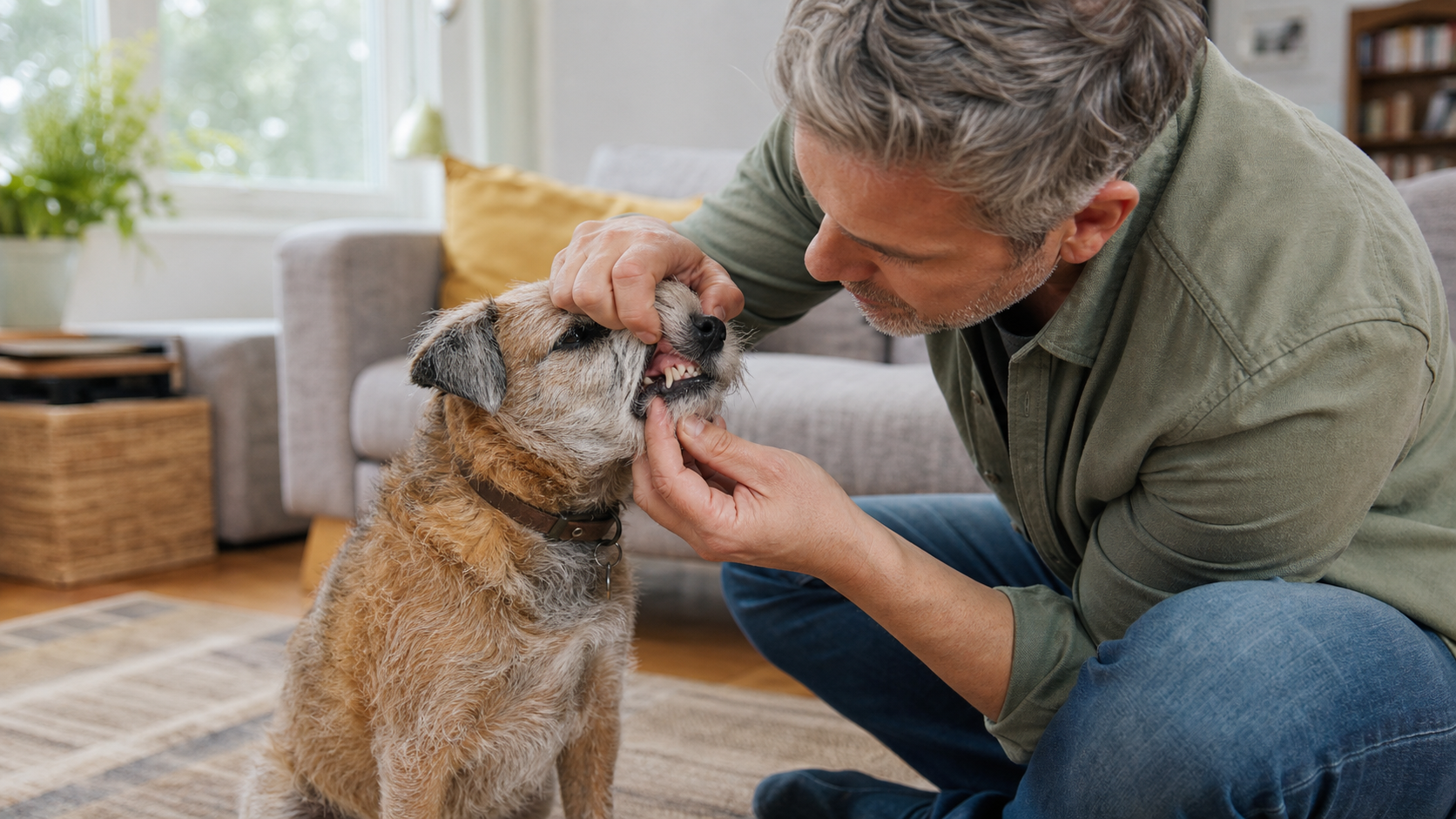
That "Old Dog Breath" Is Not Normal: The Mouth Problem Owners Laugh Off
"He has always had dog breath."
Maybe. But persistent bad breath is not a personality trait, and it is not a harmless senior-dog accessory.
Bad breath can be one of the first things families notice when dental disease is present. Cornell University College of Veterinary Medicine notes that plaque and tartar can lead to gum inflammation, infection, bone loss, and eventually tooth loss. Dental disease may also cause oral pain and difficulty eating.
That does not mean every unpleasant breath odor has one explanation. It does mean the mouth deserves a real conversation with a veterinarian rather than a shrug and a joke.
## Dogs Often Keep Eating Through Mouth Pain
One reason dental disease gets missed is that many dogs continue eating.
They may finish meals while quietly changing how they eat: chewing on one side, dropping kibble, taking longer, avoiding hard treats, backing away from the bowl, or accepting only softer foods. A dog can still be food-motivated and have a painful mouth.
The [Cornell dental-disease guide](https://www.vet.cornell.edu/departments-centers-and-institutes/riney-canine-health-center/canine-health-information/dental-disease-and-home-dental-care) lists bad breath, reduced appetite or difficulty eating, bleeding from the mouth, jaw or facial swelling, drooling, and nasal discharge among signs that warrant a veterinary call.
Other changes worth noting include:
- Pawing at the face or rubbing the muzzle
- New sensitivity when the head is touched
- Visible tartar or red gums
- A broken-looking tooth
- Food falling from the mouth
- A sudden preference for easier-to-chew food
- Behavior changes around meals or handling
None of these signs confirms a diagnosis at home. They are reasons to document what you see.
## What You Can See Is Not the Whole Story
The front of the teeth may look better than the gums and structures below them.
Cornell's dentistry service explains that a conscious oral exam can help a veterinarian suspect dental disease, but a definitive diagnosis and treatment plan require a more complete veterinary dental assessment, including probing, charting, and full-mouth X-rays under general anesthesia.
That is why a home visual check has limits. You can notice odor, bleeding, obvious tartar, swelling, or a broken tooth. You cannot tell how much disease may be below the gumline by looking for ten seconds.
## Do Not Scrape Tartar at Home
Do not use dental picks, sharp tools, or human instruments to scrape a dog's teeth at home.
You can injure the gums, frighten the dog, and still miss disease below the gumline. If you are unsure what home care is appropriate for your dog's mouth, ask the veterinary team to demonstrate a safe routine after they have assessed the mouth.
The [WSAVA Global Dental Guidelines](https://wsava.org/global-guidelines/dental-guidelines/) emphasize that oral and dental disease is among the most common medical conditions affecting companion animals. Professional guidance matters because dental care is more than making teeth look cleaner.
## A Better Way to Prepare for the Appointment
Before you call or visit, make a short note:
1. When did the odor change or worsen?
2. Is eating slower, messier, or more selective?
3. Is there drooling, bleeding, swelling, pawing, or facial sensitivity?
4. Have you noticed weight loss or reduced appetite?
5. What dental care has your dog had before, if known?
6. What medications, supplements, and health conditions does your dog have?
If your dog allows it safely, take a photo of an obvious broken tooth or unusual swelling. Do not force the mouth open, especially if your dog seems painful or frightened.
## Why Senior Dogs Need the Conversation Earlier
Senior pets have a greater risk of mouth problems, including dental disease and oral tumors. The [American Veterinary Medical Association senior-pet guide](https://ebusiness.avma.org/files/ProductDownloads/mcm-client-brochures-senior-pets-2023.pdf) notes that senior checkups typically include a dental exam and may include dental X-rays to identify problems below the tooth surface.
AAHA also lists dental disease among common senior-pet concerns and recommends veterinary assessment when families notice bad breath, swollen or bleeding gums, damaged teeth, or eating difficulty.
Age alone does not tell the veterinarian what your dog needs. The plan should take into account the dog's examination, medical history, anesthesia considerations, and the family's observations.
## When It Cannot Wait
Contact a veterinarian promptly for facial swelling, mouth bleeding, a tooth that appears broken, refusal to eat, marked pain, sudden drooling, or a major change in chewing.
Seek urgent care if your dog has trouble breathing, cannot close the mouth normally, has severe swelling, collapses, or appears severely unwell.
## The Takeaway
Bad breath may be common. That does not make it normal.
The kindest first move is not to diagnose the smell yourself. It is to notice the change, record the details, and let a veterinary team evaluate the mouth properly. A senior dog should not have to prove pain by refusing dinner before the issue is taken seriously.
---
## Sources
1. Cornell University College of Veterinary Medicine. [Dental Disease and Home Dental Care](https://www.vet.cornell.edu/departments-centers-and-institutes/riney-canine-health-center/canine-health-information/dental-disease-and-home-dental-care).
2. Cornell University College of Veterinary Medicine. [Dentistry and Oral Surgery](https://www.vet.cornell.edu/hospitals/services/dentistry-and-oral-surgery).
3. Cornell University College of Veterinary Medicine. [Periodontal Disease](https://www.vet.cornell.edu/departments-centers-and-institutes/riney-canine-health-center/canine-health-information/periodontal-disease).
4. World Small Animal Veterinary Association. [Global Dental Guidelines](https://wsava.org/global-guidelines/dental-guidelines/).
5. American Veterinary Medical Association. [Senior Pets: What You Should Know](https://ebusiness.avma.org/files/ProductDownloads/mcm-client-brochures-senior-pets-2023.pdf).
## Medical Disclaimer
This article is for general educational purposes only and is not a substitute for veterinary examination, diagnosis, or treatment. Do not use sharp tools or force your dog's mouth open at home. Contact a licensed veterinarian for persistent bad breath, eating changes, bleeding, swelling, or signs of oral pain.